
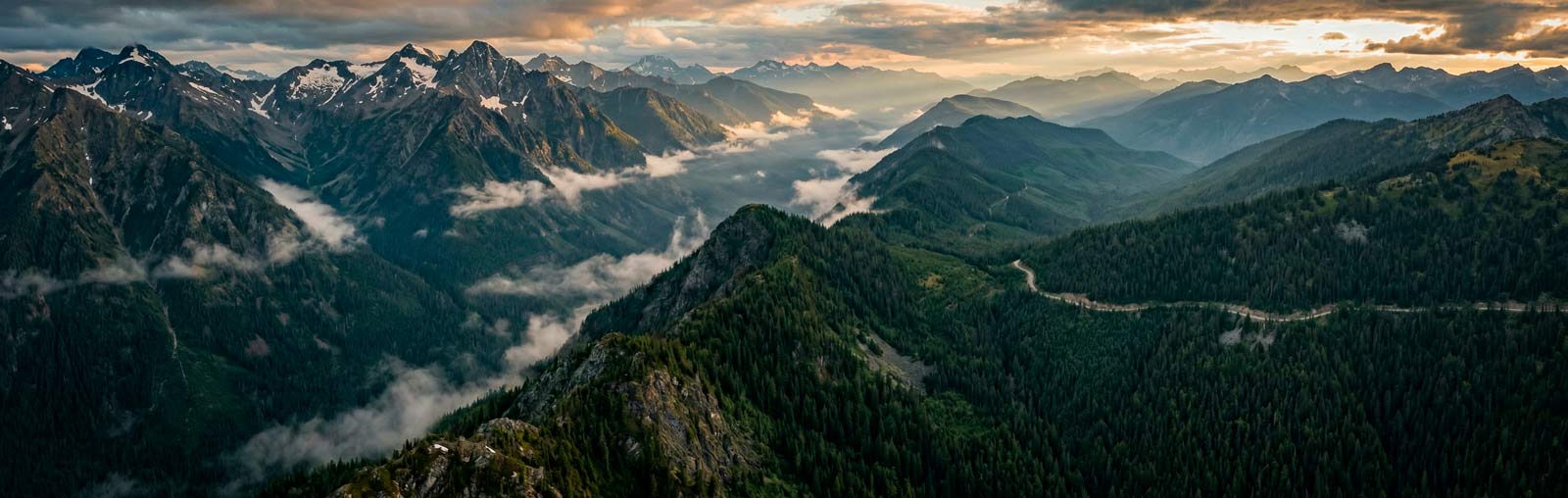
$50 million. That was the estimated total exploration spend in BC’s Toodoggone mining district in 2025 alone – from a region most Canadians couldn’t place on a map. The district sits 300 kilometres northwest of Prince George, in the Omineca Mountains, accessible mostly by float plane or seasonal road. And yet, over $50 million flowed into drilling programs, camp construction, and geological surveys here in a single year.
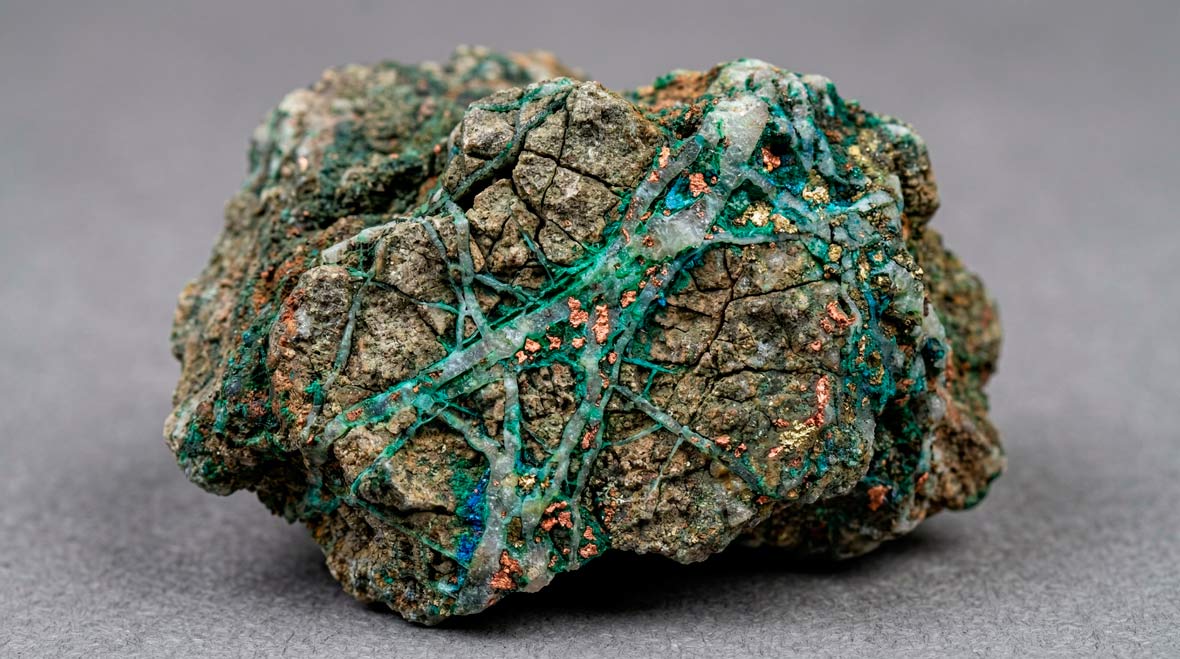
The reason is geology – and the copper gold exploration in BC that it drives. The Toodoggone hosts porphyry copper-gold deposits, the same deposit type that supplies roughly 60% of the world’s copper, alongside high-grade epithermal gold-silver veins. The combination has produced over 3.2 million ounces of gold historically and attracted companies ranging from five-person juniors to Freeport-McMoRan, the world’s largest publicly traded copper producer.
Disclaimer: This website is not affiliated with, endorsed by, or connected to the former Starfire Minerals Inc. or its directors. The domain starfireminerals.ca is operated as an independent educational resource.
What Makes a Porphyry Deposit
The USGS defines a porphyry copper deposit as one where copper-bearing sulphides sit within a network of fracture-controlled stockwork veinlets and as disseminated grains in hydrothermally altered rock, centred on a porphyritic intrusive complex. The language is dry. The economics aren’t.
Porphyry deposits form at convergent plate margins, places where oceanic plates dive beneath continental crust, when hydrothermal fluids rise from magma chambers at 8 to 15 kilometres depth and deposit metals in shallow subvolcanic intrusions at 1 to 4 kilometres. The deposits are enormous by volume. Median copper grades sit around 0.44%, which sounds low until you consider that individual deposits routinely contain hundreds of millions of tonnes of ore. Kemess South, just 60 kilometres southeast of the district’s main cluster, held 91.7 million tonnes grading 0.57 g/t gold and 0.21% copper at the start of its mine life.
Epithermal Veins – A Second, Higher‑Grade System
The Toodoggone also hosts a second style of mineralization, epithermal veins, which typically carry higher grades in smaller, more discrete structures. The historic Lawyers mine, operated by Cheni Gold Mines from 1989 to 1992, processed 619,869 tonnes at a recovered grade of 8.71 g/t gold. That’s roughly fifteen times the grade of Kemess South, but in a fraction of the tonnage. Both styles can exist on the same property, which is part of what makes this district unusual.
The Geology Beneath the Claims
The Toodoggone district lies within the Stikine Terrane – the largest single terrane block in the Canadian Cordillera, covering over 120,000 square kilometres. Stikinia is an ancient intraoceanic island-arc that accreted to North America during the Jurassic. The rocks we care about sit within the Hazelton Group, specifically the Toodoggone Formation: a package of Early Jurassic subaerial volcanic rocks – latites, dacites, ash-flow tuffs – deposited between roughly 201 and 188 million years ago.
BC Geological Survey Bulletin 86, authored by Diakow, Panteleyev, and Schroeter in 1993, remains the definitive reference. The formation is at least 2.2 kilometres thick and unusually felsic – higher in potassium and silica than other volcanic belts of the same age along BC’s coast. Subvolcanic porphyry intrusions punched through these volcanics, carrying the hydrothermal fluids that deposited copper, gold, and silver.
Geoscience BC funded a study (Report 2019-08) specifically examining porphyry-to-epithermal transitions in the Toodoggone. The UBC Mineral Deposit Research Unit (MDRU) led the work, mapping how mineralizing fluids moved through the volcanic pile and created different deposit styles at different depths. That research is still guiding exploration targeting today.
Who Is Exploring the Toodoggone in 2026?
The district’s current renaissance started quietly around 2020 and accelerated through 2024–2025. Several operators stand out.
Amarc Resources (TSXV: AHR), in a joint venture with Freeport-McMoRan, made the AuRORA porphyry copper-gold-silver discovery at the JOY District. Their first drill test returned 82 metres grading 1.08% CuEq, including 1.24 g/t gold and 0.38% copper. By the end of 2025, 45 drill holes covering 17,586 metres had expanded AuRORA over a 1 km × 1 km area. Freeport spent over C$35 million to earn 60% and then committed an additional C$75 million for Stage 2. Those are the kind of numbers that get a district noticed.
TDG Gold (TSXV: TDG) had a transformational year. Its Aurora West discovery at the GSN project intersected 100.0 metres grading 2.24 g/t gold and 0.38% copper within a broader 240.6-metre zone. The company’s share price rose by over 600% in 2025. Skeena Gold & Silver acquired a roughly 13% stake.
Thesis Gold (TSXV: TAU) published a Pre-Feasibility Study for its Lawyers-Ranch project in December 2025 – after-tax NPV of C$2.37 billion at a 5% discount rate, with an IRR of 54.4% at US$2,900/oz gold. Maiden mineral reserves came in at 76.16 million tonnes grading 0.97 g/t gold and 28 g/t silver. Centerra Gold invested $24.5 million for a 9.9% stake, which suggests potential infrastructure synergies with their nearby Kemess project.
Sun Summit Minerals (TSXV: SMN) reported some of the highest individual intercepts in the district – 81.0 metres of 4.8 g/t gold at its JD Project, including 14.0 metres of 19.81 g/t. The company expanded its Toodoggone land package to 25,000 hectares.
Historical Producers: What the District Has Already Delivered
The Toodoggone isn’t speculation – it has a track record. Baker Mine started the district in 1981, making it the first producer. Operations ran intermittently from 1981 to 1983 and again from 1996 to 1997, processing 81,878 tonnes at a recovered grade of 15.68 g/t gold. The grades were extraordinary, but the tonnage was small.
Shasta Mine added 113,113 tonnes at 5.33 g/t gold between 1989 and 1991, with a brief restart in 2000. Other properties explored over the decades – Porphyry Pearl, Marmot, Moose – saw drilling but never reached production. The Porphyry Pearl prospect, located north of Toodoggone River, returned copper-gold mineralization in multiple drill campaigns between the 1970s and 2000s, though no operator advanced it past the exploration stage. And then there was Kemess South – a different animal entirely. The open pit ran from 1998 to 2011, processing 228.7 million tonnes at 0.57 g/t gold.
Total recovered production: 2,955,000 ounces of gold and 783.6 million pounds of copper. One deposit, on its own, produced more gold than the rest of the district combined by a factor of roughly 50.
That production gap between Kemess and the epithermal mines tells us something about what the district might become. If Thesis Gold’s Lawyers-Ranch enters production at PFS-level output, and Centerra restarts Kemess, we could see two mines operating simultaneously in the Toodoggone for the first time. The infrastructure synergies alone – shared road access, power, camps – would change the economics for every other explorer in the area.
How Explorers Target Porphyry Systems Here
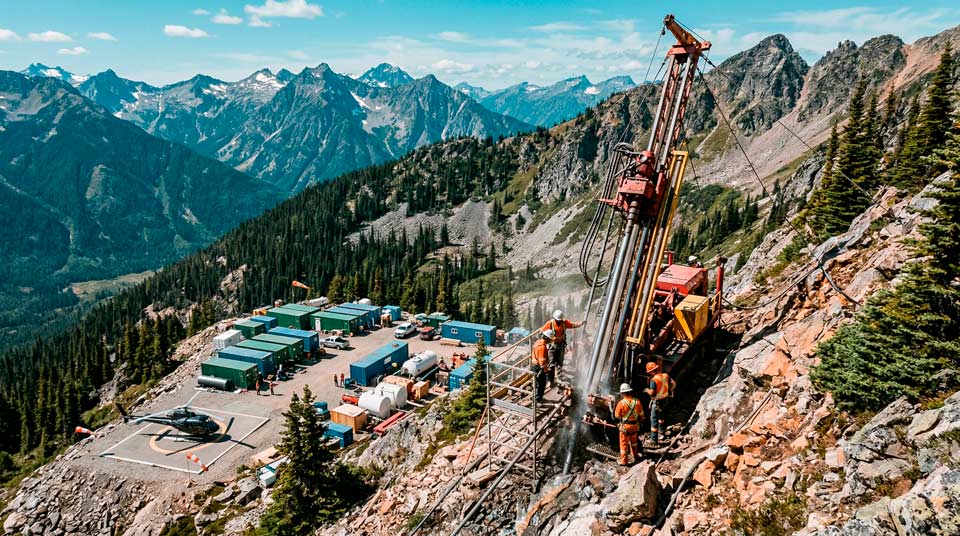
The standard toolkit hasn’t changed much in two decades: induced polarization (IP) surveys to detect disseminated sulphides, magnetic surveys to map alteration halos, soil geochemistry to find surface anomalies, and diamond drilling to test targets at depth. What has changed is the data processing. Companies now routinely run 3D inversions of IP data and integrate them with satellite imagery and LiDAR terrain models.
A typical junior drill program in the Toodoggone runs 5,000 to 15,000 metres and costs somewhere between C$2 million and C$8 million, depending on accessibility. Helicopter-supported drilling, common here given the terrain, can push costs above $500 per metre. NQ-2 core is standard. Samples go to accredited labs in Smithers or Vancouver for ICP-ES and fire assay analysis.
Permitting and the Provincial Push
BC’s mining ministry issued 35% more exploration permits in 2025 than in 2024. Starting April 1, 2026, new fixed permitting timelines of 40 to 140 days will apply – a direct response to industry feedback about regulatory unpredictability. Jagrup Brar, BC’s Minister of Mining and Critical Minerals, framed it as responding to
“industry feedback, while still protecting the environment and respecting reconciliation with First Nations.”
BC spent C$552 million on copper, gold, and other mineral exploration in 2024 – down 14% from the prior year, mostly because flagship projects in the Golden Triangle matured from exploration into development. The Toodoggone is part of the countertrend: grassroots and early-stage spending is rising even as the provincial total falls.
For a deeper look at the district’s largest past producer, and what’s planned for its next chapter, see our article on the Kemess mine in British Columbia.
Sources: NRCan Mineral Exploration Bulletin, BC Geological Survey (Bulletin 86, Open Files 2024-06, 2026-01), Geoscience BC Report 2019-08, USGS SIR 2010-5070-B, corporate filings from Thesis Gold, TDG Gold, Amarc Resources, Sun Summit Minerals, Centerra Gold. District production figures from TDG Gold corporate presentation and BC MINFILE.