
898 mining companies traded on the TSX Venture Exchange at the end of 2025. That number sounds large. But we need to put it next to this one: three years earlier, the count was 965. Sixty-seven companies vanished from the board in thirty-six months. Some merged. Some graduated to the senior TSX. Most just ran out of money.
This is the reality of junior mining exploration companies in Canada – an industry where 85% to 95% of listed explorers never produce a single ounce of anything. The odds are worse than most investors assume. PDAC puts it more bluntly: one in every 10,000 identified mineral prospects becomes an operating mine.
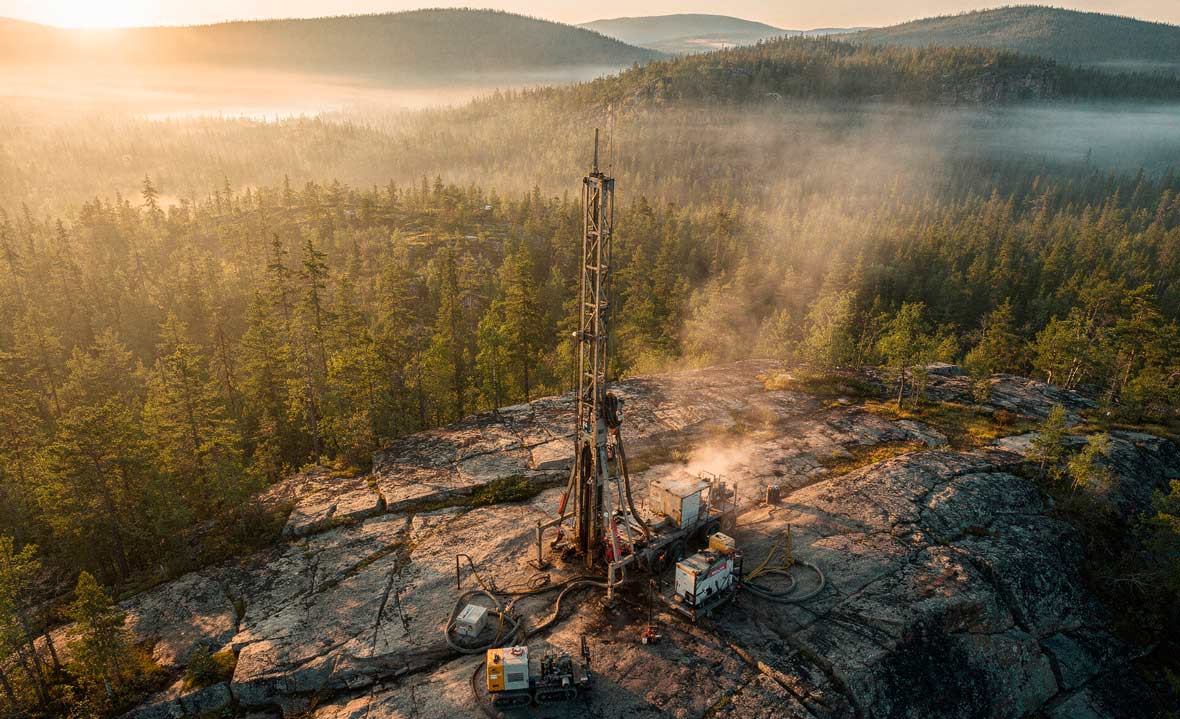
Starfire Minerals Inc. was one of those 67 disappearances. We’ve been following Canadian junior mining for years – the successes, the failures, and the patterns that decide which companies survive. This site grew out of that interest. It’s our own project, built from public data and a genuine curiosity about the sector.
Disclaimer: This website is not affiliated with, endorsed by, or connected to the former Starfire Minerals Inc. or its directors. The domain starfireminerals.ca is operated as an independent educational resource.
What a Junior Mining Company Actually Does
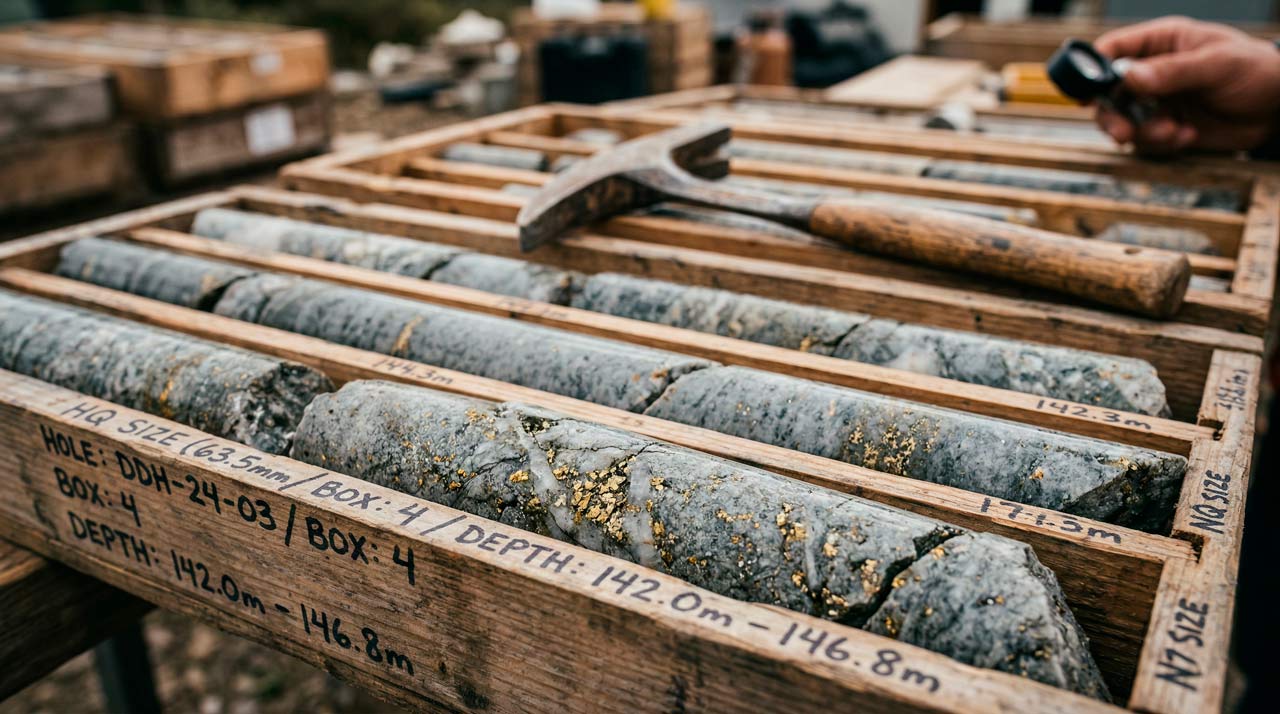
The business model is straightforward on paper. A junior exploration company stakes mineral claims, raises capital, usually through private placements or flow-through share offerings, and then spends that capital drilling holes into the ground. If the drill results show economic mineralization, the company publishes an NI 43-101 technical report and either attracts a larger partner or attempts to advance the project alone.
What makes the model brutal is time. NRCan’s data tells us that 848 companies were actively exploring across Canada in 2024, running 2,330 projects. They spent a combined $4.1 billion. Junior companies, those with market caps typically under $100 million, accounted for $2.0 billion of that, or 49%. But here’s the part that rarely gets quoted: juniors represented 81% of all active companies while contributing less than half the spending. Most of them were operating on budgets that wouldn’t cover a single deep drill program.
Jeff Killeen, PDAC’s Director of Policy, put it plainly at the 2026 convention:
“Only about 10 percent of every dollar raised is getting down to those sub-$100 million market cap companies, the lion’s share of the junior explorers.”
That’s the funding bottleneck we see across the sector right now.
Starfire Minerals Inc. – What Went Wrong at This Junior Miner
Starfire Minerals Inc. was incorporated in British Columbia in 1986 and spent nearly three decades exploring for nickel in Ontario’s Langmuir Belt and copper-gold at its Porphyry Pearl property in BC’s Toodoggone district. The company listed on the Canadian Securities Exchange on April 29, 2013, trading under the ticker SFR – sometimes catalogued as SFR Inc on OTC screeners, or indexed as Starfire Gold by European stock databases. It also carried a listing on the Frankfurt Exchange (WKN 784574).
Two years later (March 26, 2015), the CSE suspended trading. The reason was default on exchange requirements, which typically means a company failed to file financial statements or maintain minimum listing standards. On August 18, 2016, Starfire Minerals was delisted. It had 74,000,840 shares outstanding and 61,904,061 reserved for issuance. The CEO, Dan Mosher, appears to have moved into real estate in Arizona. Nobody at the company has issued a public statement since 2013.
We don’t know whether Starfire was formally dissolved through BC’s Corporate Registry – that information requires a paid search we haven’t conducted. What we do know is that the website sat frozen for years.
How Starfire Compares to Other Canadian Junior Mining Companies
Starfire’s trajectory isn’t unusual. But comparing it to companies that survived, or didn’t, gives a sense of the range. Here’s what we found across a sample of Canadian junior mining exploration companies operating in Ontario and British Columbia:
| Company | Exchange | Status (2026) | Metals | Province | Market Cap |
|---|---|---|---|---|---|
| Starfire Minerals Inc. | CSE: SFR | Delisted (2016) | Ni, Cu, Au | ON, BC | – |
| Gold Finder Resources | TSXV: GLD | Active | Au, Ag, Cu, Zn | Ontario | C$5.9M |
| Bold Ventures Inc. | TSXV: BOL | Active | Au, Cu, Ni, Cr, PGE | Ontario | C$6–9M |
| Northstar Gold Corp. | CSE: NSG | Active | Au, Cu | Ontario | C$6.2M |
| Canada One Mining | TSXV: CONE | Active | Cu, Au, Ni, Zn | BC, Ontario | C$2.3M |
| NewOrigin Gold Corp. | TSXV: NEWO | Delisted (2024) | Au, Ni, Cu | Ontario | Acquired |
| Heritage Mining Ltd. | CSE: HML | Active | Au, Ag | Ontario | C$7.0M |
| Condor Resources Inc. | TSXV: CN | Active | Au, Ag, Cu | Peru (HQ: BC) | C$15.7M |
NewOrigin Gold was acquired by Harfang Exploration in November 2024 through a court-approved plan of arrangement – shareholders received 0.25694 Harfang shares per NewOrigin share. Bold Ventures started drilling at its Burchell gold-copper project in January 2026, funded partly by a C$212,500 OJEP grant. Heritage Mining discovered visible gold in core at its Melba Project, with assays returning 14.24 g/t Au over 4.11 metres from roughly 85 metres depth.
Starfire, by contrast, went quiet after 2013 and never resumed. No drill results, no financings, no corporate updates for the final three years of its exchange life. That silence alone tells us something about what happened to its treasury.
The Flow-Through Share Question
One detail worth sitting with: in 2025, flow-through shares accounted for roughly 76% of all funding received by Canadian mineral exploration companies – about C$1.6 billion. The mechanism lets junior miners transfer tax deductions to investors, which has historically been the single most effective tool for financing grassroots exploration.
Ontario’s own data shows that 60% of mines that opened in the province since 2011 were explored by juniors using flow-through shares. So, the system works – when it works. Starfire Minerals also used flow-through financing during its active years. The difference between Starfire and a company like Bold Ventures isn’t the funding mechanism. It’s what happens after the money lands.
What We Look for When Evaluating a Junior Miner
After spending time with the data on these companies, and watching junior mining stocks in Canada for years, a few patterns stand out. The explorers that survive tend to share some traits: recent and continuous drill results, management teams with prior discovery credits (Bold Ventures’ team was involved in three major finds – Eagle River, Windfall Lake, Ring of Fire), current exchange filings, and at least one strategic partner or institutional backer. Northstar Gold, for example, attracted a $4 million co-investment from DIGITAL for its Cam Copper project in 2026.
The ones that disappear, like Starfire Minerals, like NewOrigin before its acquisition, share different traits: long gaps between news releases, no drilling activity for multiple seasons, shrinking treasuries with no visible path to financing. By the time the exchange suspends trading, the outcome has usually been decided for months.
Common Questions
A publicly listed exploration company, typically on TSXV or CSE, that explores for minerals but does not operate a producing mine. There were 898 mining companies on TSXV alone at the end of 2025.
Starfire Minerals Inc. (CSE: SFR) was suspended on March 26, 2015, for default on exchange requirements and delisted on August 18, 2016. The company explored for nickel near Timmins, Ontario and copper-gold in BC’s Toodoggone district.
Primarily through private placements and flow-through share offerings. Flow-through shares raised C$1.6 billion in 2025 alone, funding about 76% of all mineral exploration activity in Canada.
Industry figures converge around 5–15%. PDAC states that only 1 in 10,000 mineral prospects leads to an operating mine.
Sources: NRCan Canadian Mineral Exploration Information Bulletin (2025), PDAC Convention presentations (2025–2026), CSE Bulletins, TSXV market data, Ontario Critical Minerals Strategy.