
2,955,000 ounces of gold. That’s how much came out of Kemess South between 1998 and March 2011 – along with 783.6 million pounds of copper. For a time, it was British Columbia’s largest gold producer. The open pit processed 228.7 million tonnes of ore at roughly 50,000 tonnes per day before the economics stopped working and Northgate Minerals shut it down.
The mine didn’t disappear, though. It just went quiet, for over a decade. Then in January 2026, Centerra Gold published a Preliminary Economic Assessment that valued the project at $1.094 billion after tax. The Kemess story, it turns out, has a second act.
Disclaimer: This website is not affiliated with, endorsed by, or connected to the former Starfire Minerals Inc. or its directors. The domain starfireminerals.ca is operated as an independent educational resource.
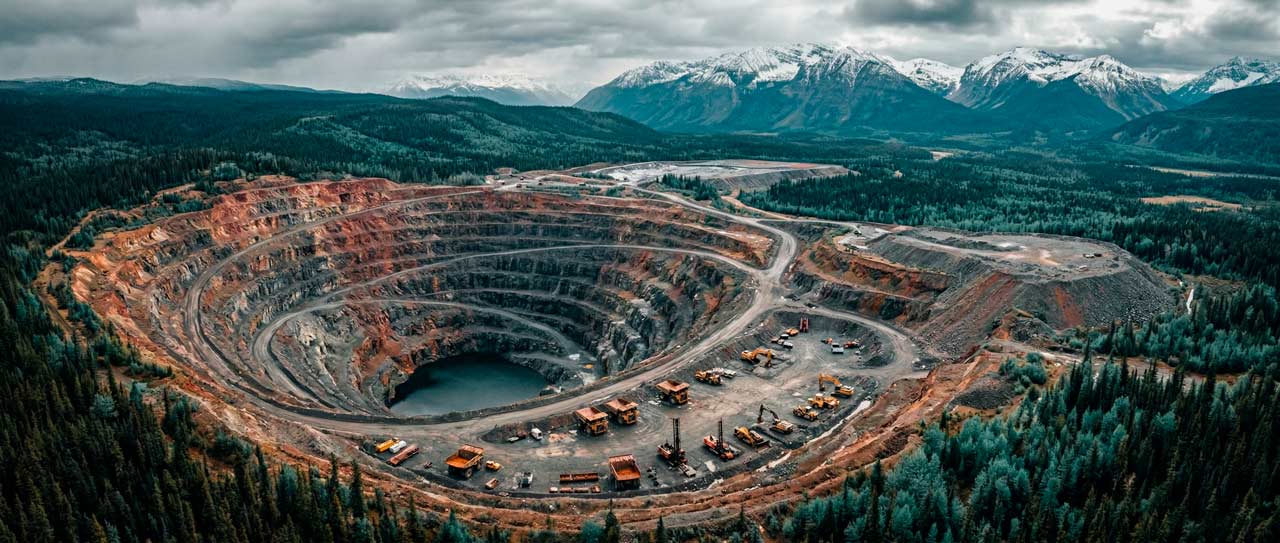
Where Kemess Sits
For anyone searching for a Kemess mine location map – the coordinates are 57°00’21″N, 126°45’03″W, in the Omineca Mining Division of north-central BC, northeast of Thutade Lake at the head of the Finlay River. NTS map sheet 094E02W. BC MINFILE reference 094E 094 for Kemess South, 094E 021 for the underground deposit.
Access is fly-in, fly-out via the on-site Kemess Creek Airport, or by the Omineca Resource Access Road from Prince George, roughly 550 kilometres of logging roads. Power comes through a 380-kilometre, 230 kV transmission line from Mackenzie, one of BC’s longest privately owned power lines. That infrastructure already being in place matters for what comes next.
The mine lies within the Toodoggone mining district, an area producing renewed interest from both juniors and majors. Thesis Gold’s Lawyers-Ranch project is nearby, as is TDG Gold’s Greater Shasta complex and the Amarc/Freeport AuRORA discovery. The district as a whole attracted over $50 million in exploration spending in 2025.
Ownership Timeline
Kemess has passed through several hands, and each transition tells us something about the project’s economics at the time.
El Condor Resources discovered the deposit in the 1980s. Northgate Exploration (later Northgate Minerals) developed Kemess South through the 1990s and brought it into production in 1998 – only for Royal Oak Mines, which held a partial interest, to go bankrupt in 1999. Northgate consolidated ownership and ran the mine until 2011.
In 2007, Northgate proposed developing Kemess North as a second open pit, but the joint BC/federal environmental assessment panel rejected it. The plan called for using Duncan Lake, a fish-bearing lake on Tse Keh Nay territory, as a tailings storage facility. The panel said no. That rejection reshaped the project’s future.
AuRico Metals, spun out from AuRico Gold in 2014, picked up the Kemess assets and redesigned the project as an underground block cave operation (Kemess Underground). Environmental Assessment Certificate M17-01 was granted on March 15, 2017, with 33 binding conditions. Centerra Gold acquired AuRico Metals in January 2018 for C$310 million. In May 2018, Centerra sold a silver stream and royalty portfolio to Triple Flag Mining Finance for a combined US$200 million but kept gold and copper.
The January 2026 PEA: A Different Kind of Mine
Centerra’s January 19, 2026, PEA abandoned the underground-only approach. The new plan combines an open pit with longhole open stoping underground – the first time anyone has proposed this configuration for Kemess.
The numbers: a 15-year mine life producing 2.323 million ounces of gold and 851 million pounds of copper. Average annual output of 171,000 ounces gold and 61 million pounds copper, or roughly 267,000 gold-equivalent ounces per year. Total plant feed of 254.9 million tonnes at throughput rates reaching 50,000 tonnes per day after 2033. Average gold grade 0.39 g/t; copper grade 0.18%. Gold recovery 74.5%; copper recovery 88.2%.
At base-case prices of $3,000/oz gold and $4.50/lb copper: after-tax NPV at 5% discount rate of $1.094 billion, IRR of 16.4%. At spot prices from January 2026 ($4,500 gold, $6.00 copper): NPV jumps to $2.754 billion with a 28.7% IRR. Initial capital sits at $771 million, with a $277 million expansion phase. All-in sustaining cost: $971 per ounce on a by-product basis.
The PEA only evaluates about 47% of total resource tonnes – just Kemess Main and KUG zones. The updated mineral resource as of December 31, 2025: 244.4 million indicated tonnes at 0.42 g/t gold and 0.21% copper (3.3 million ounces gold, 1.1 billion pounds copper), plus 299.6 million inferred tonnes at 0.37 g/t gold and 0.19% copper.
What Stands Between PEA and Production
Centerra targets a Pre-Feasibility Study by 2027 and first production by late 2031. The 2025 exploration budget was $10 to $12 million with 28,500 metres of drilling planned. The existing EA certificate will need amendments to reflect the open pit + underground design – the original approval was for underground-only.
Indigenous Consultation and the EA
An Impact Benefit Agreement exists with Tsay Keh Nay First Nations (Tsay Keh Dene, Kwadacha, and Takla Lake), who provided letters of support for the project. The earlier Kemess North rejection taught the industry a lesson about Indigenous consultation on this site – one that appears to have been taken seriously in the redesigned approach.
The Infrastructure Question
One thing nobody has publicly clarified: how the existing 380-kilometre power line, built for Kemess South’s 50,000 tpd mill, will accommodate the new plan’s similar throughput after over a decade of limited maintenance. Centerra’s PEA mentions “well-advanced” permitting and existing infrastructure as advantages, but the condition of that infrastructure after 14 years of care-and-maintenance is a detail the Pre-Feasibility Study will need to address.
There’s also the tailings question. Kemess South’s original tailings storage facility reached capacity near the end of mine life. The PEA references reprocessing of existing tailings as a potential supplementary feed source – 8.4 million tonnes at 0.11 g/t gold and 0.08% copper from Kemess South, plus another 20 million tonnes of low-grade stockpile. Whether that material adds economic value or just complicates operations is something we expect the PFS to clarify.
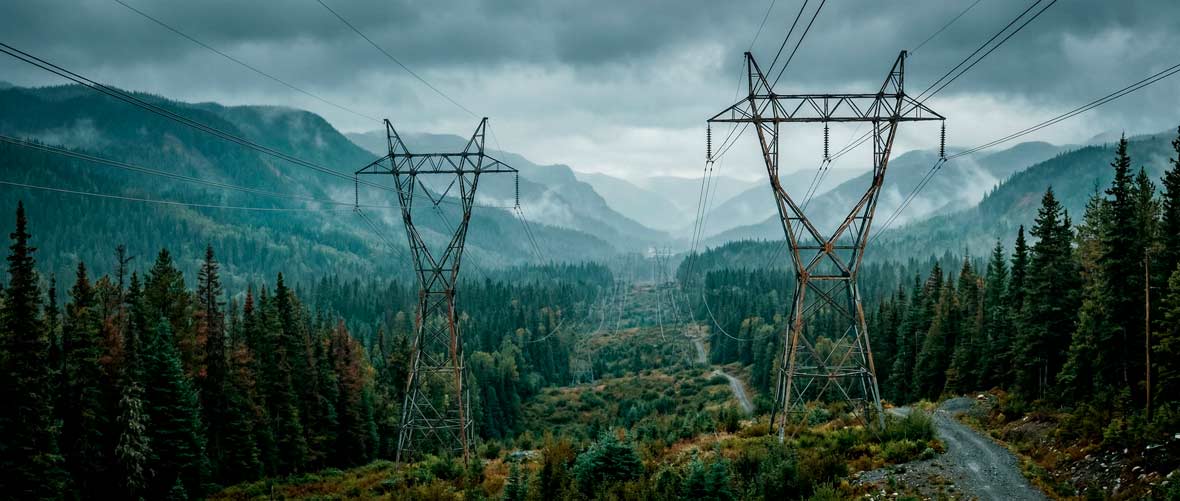
The Kemess South in Numbers
For context on what the site has already produced – Kemess South mined a total of 473.4 million tonnes of material (ore plus waste) between 1998 and 2011. The mill processed 228.7 million tonnes. Recovered metals: 2,955,000 ounces of gold, 156,600 ounces of silver, 783.6 million pounds of copper. At peak, the mine employed hundreds and generated over 280,000 ounces of gold annually – enough to make it BC’s largest gold producer around 2003.
The copper recovery rate averaged well over 85%, which for a porphyry deposit of this grade is respectable. And silver, 156,600 ounces over the mine’s life, rarely gets mentioned in reporting, but it was there. The mill’s 50,000-tonne-per-day throughput was engineered for exactly the scale that Centerra’s PEA now proposes to match.
Broader Context: Kemess in the District
Kemess doesn’t sit in isolation. Centerra invested $24.5 million for a 9.9% stake in Thesis Gold, the company advancing the nearby Lawyers-Ranch project. That investment signals potential infrastructure sharing – power lines, access roads, airstrip – that could reduce costs for both operations. If both projects advance to production, the Toodoggone would become a multi-mine district for the first time, with shared logistics that juniors exploring nearby properties would also benefit from.
The deposit type, alkalic porphyry copper-gold, is the same geology that’s now attracting billions in exploration across the broader Toodoggone district. For more on the geological context and current exploration activity, see our article on porphyry copper-gold deposits in the Toodoggone.
Sources: Centerra Gold PEA press release (January 19, 2026), Centerra Gold investor relations, BC MINFILE (094E 094, 094E 021), IAAC Reference #80063, BC EAO Certificate M17-01, BC Geological Survey Open File 2026-01, Mining Data Online.