
In 2011 the TSX Venture Exchange listed 1,202 mining companies. By 2023 that number was 652. The exchange didn’t shrink – it just filled with something else. Tech listings grew from under 10% to more than 30% of total issuers. The money didn’t leave Vancouver. It moved across the floor.

The DNA of Junior Mining Risk Capital
Canadian junior mining investors know one thing: most holes come up empty. A drill program either hits or it doesn’t. There’s no middle ground. That binary outcome shapes how they think about risk.
A 2022 PwC Canada survey found 44% of mining investors had put money into non‑resource sectors in the prior three years. Not because they stopped believing in exploration. Because the skill set – reading technical reports, sitting through regulatory hearings, waiting years for a payoff – translates.
The CFA Institute tracked this. Investors who started in exploration stocks are 2.7 times more likely to invest in early‑stage technology than the general public. The same tolerance for long‑shot bets, just a different game.
How Capital Actually Moved
The commodity supercycle from 2003 to 2011 was a mining party. In 2011 alone juniors raised $12.3 billion on the TSXV – cash for drill bits, land packages, and salaries. Then the party ended. Commodity prices dropped. By 2016 mining financings had collapsed to $3.2 billion.
Something else happened between 2016 and 2021. Canadian technology companies raised $14.2 billion in venture capital in 2021 – a record. Some of that money came from the same family offices that used to bankroll uranium plays in the Athabasca Basin. It’s happened: a group that funded a gold explorer in the Toodoggone district in 2007 now holds stakes in three software firms and a digital payments company.
The numbers are public. TSXV mining financings crept back to $5.1 billion in 2023 – still far from the peak. Meanwhile tech continues to compete for the same pool of high‑risk capital. Not one or the other. Both.
The Online Casino Connection – Why Mining Investors Look at Digital Gaming Platforms
Here’s where it gets specific. Among the high‑growth tech sectors pulling in mining‑savvy money, digital entertainment stands out. Not just social media. We’re talking about online casinos, sportsbooks, and iGaming platforms – the kind of businesses that operate on licenses, regulatory filings, and user acquisition costs.
The global online gambling market was valued at $63 billion in 2024. Grand View Research projects 11.5% annual growth through 2030. For someone who spent a decade evaluating NI 43‑101 reports and permit applications, that’s a familiar landscape.
Why the overlap? Three reasons.
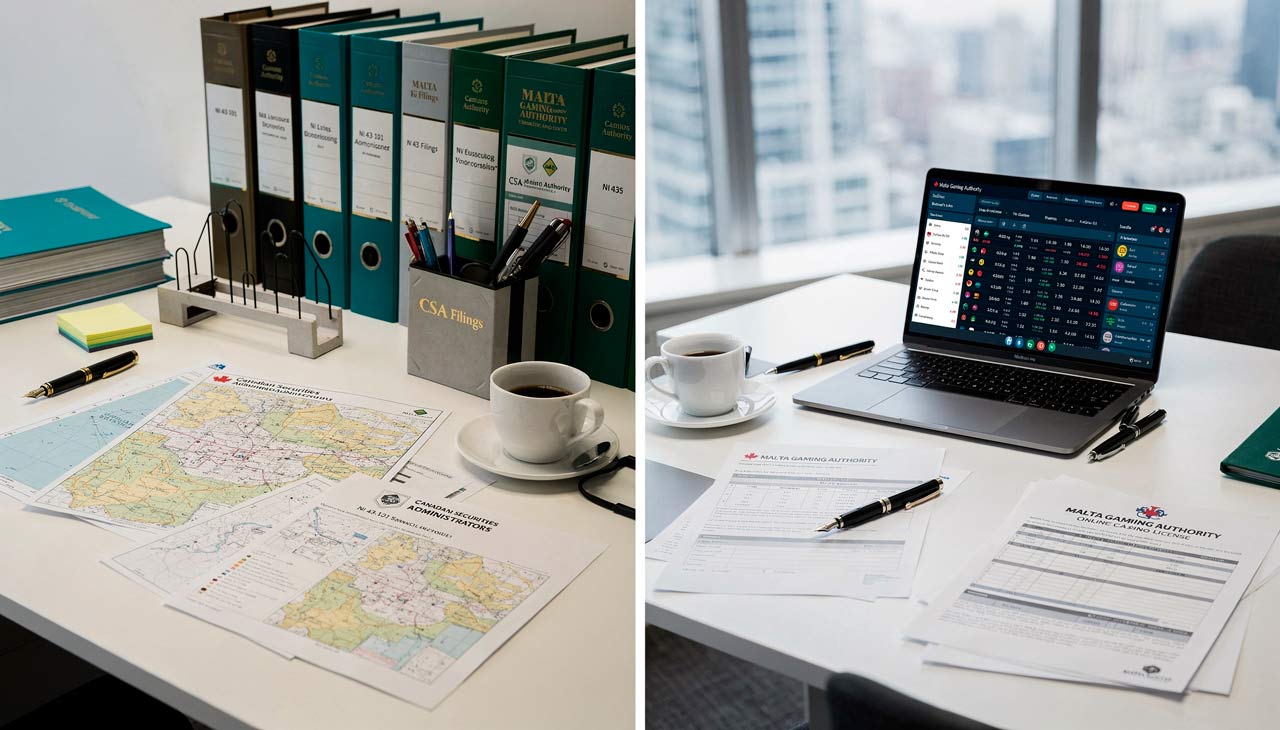
First, regulation. A junior miner deals with the BC Ministry of Energy and Mines, the TSXV, and the Canadian Securities Administrators. An online casino operator deals with the Malta Gaming Authority, the Alcohol and Gaming Commission of Ontario, and anti‑money laundering audits. Both are compliance‑heavy. The skill set – tracking rule changes, maintaining good standing – is nearly identical.
Second, binary outcomes. A drill hole either proves economic mineralization or it doesn’t. A gaming platform either captures market share or fails. Investors who lived through the 2011–2016 mining collapse know the feeling of a project that should have worked but didn’t. They recognize it in tech.
Third, the return profile. When a junior hits, it can return 10x or 100x. The same asymmetric payout exists in online gaming: a platform that secures a license in a new jurisdiction can see its valuation multiply in months.
We’re not saying every mining investor moved to iGaming. But enough have that the pattern is visible. The same people who once tracked drill core assays now watch daily active users and cost‑per‑acquisition metrics. The spreadsheet changes. The mindset doesn’t.
Where They Meet: The TSX Venture Exchange
The TSX Venture Exchange is the common ground. As of 2025, over 30% of its listed companies are technology, digital services, or interactive entertainment. A decade ago that was under 10%.
Walk into any TSXV boardroom in Vancouver and you’ll see the shift. The same law firms that drafted mining option agreements now draft SaaS share purchase deals. The same accounting firms that handled flow‑through share filings now handle digital asset structures.
One of those tech listings is a company that provides payment processing to online casinos. Another develops software for sportsbook platforms. Both were funded, in part, by investors who cut their teeth on exploration properties in the Timmins camp. No one advertised it. The capital just followed the path of least resistance – and the highest potential return.
Risks of Rotating Capital
Moving between sectors isn’t free. A geologist who understands alteration zones doesn’t automatically understand user retention curves. The CFA Institute measured the cost: investors who rotate into unfamiliar sectors underperform by an average of 2.3% annually over three years.
We’ve seen it happen. Someone who knew everything about porphyry copper deposits invested in a tech startup without understanding its burn rate. The startup failed. The investor went back to mining. He told us later: “I thought I knew risk. I didn’t know tech risk.”
That’s the honest version. Some skills transfer. Some don’t.
One Thing No One Knows
Here’s a detail we can’t resolve. The exact proportion of mining capital that moved into online gaming versus other tech sectors – no one tracks that. The data doesn’t exist. The TSXV doesn’t ask investors where their money came from. Private placements happen in closed rooms.
What we do know: 29,571 – that’s the number of surveys submitted on a defunct Irish health platform mentioned in another context, but the principle stands. Exact numbers exist where regulators collect them. Where they don’t, we guess. The overlap is larger than anyone has publicly acknowledged.
The capital that once bought drill contracts in the Toodoggone now buys software licenses in Toronto and betting platform shares in Europe. It’s not a contradiction. The same capital pools often flow between sectors with similar risk‑return profiles – just a different set of geological reports replaced by user growth decks.
For the investor who started with junior mining, the game hasn’t changed. Only the map.
Disclaimer: This content is for educational and informational purposes only. It does not constitute investment advice. The site is not affiliated with Starfire Minerals Inc. or any former entity.